




Bringing a new puppy home is a whirlwind of joy, tiny paw prints, and—let’s be honest—a fair amount of chewed-up shoes. If you are feeling a bit overwhelmed, you aren’t alone. That is where petsmart puppy training comes in to save the day! Training isn’t just about teaching “sit” or “stay”; it is about learning how to talk to your new best friend. At PetSmart, the focus is on building a language of love and trust. Whether your pup is a tiny 10-week-old explorer or a rowdy 5-month-old, these classes offer a safe space to grow. Think of it as a preschool for your dog, where they learn to be a polite member of the family while you learn how to be the best “pet parent” possible.
In my experience, the hardest part of having a puppy is the “chaos” phase. You want to go for a walk, but your pup wants to chase every leaf in sight. Petsmart puppy training helps bridge that gap. By using positive reinforcement, you aren’t just “bossing” your dog around; you are rewarding them for making good choices. This creates a happy dog who wants to listen because they know something good is coming. Plus, doing this in a store full of treats and other dogs is the ultimate “real-world” test. If your dog can listen to you at PetSmart, they can listen to you anywhere!
Detailed Puppy Training Biography Table
| Feature | Details |
| Primary Goal | Foundational skills, socialization, and owner-pet bonding. |
| Target Age | 10 weeks to 5 months old. |
| Class Duration | 6 weeks (one 60-minute session per week). |
| Average Cost | Approximately $149 per 6-week course. |
| Training Method | Positive reinforcement and rewards-based learning. |
| Trainer Status | PetSmart Accredited Trainers. |
| Prerequisites | Up-to-date vaccinations (DHPP and Rabies as age-appropriate). |
| Core Cues | Sit, Down, Come, Leave It, and Loose Leash Walking. |
Why Choose PetSmart Puppy Training for Your New Pal?
Choosing the right place for your dog’s education is a big deal. Petsmart puppy training stands out because it is accessible and uses methods that experts love. They use positive reinforcement, which means they use treats, praise, and toys to encourage good behavior. This is much better than old-school “scare tactics.” When you use rewards, your puppy feels confident and safe. This makes them much more likely to remember what they learned.
Another great reason is the environment. Most people try to train at home where it is quiet. But life isn’t quiet! In a petsmart puppy training class, your dog learns to focus even when there are birds chirping, carts rolling, and other puppies wiggling nearby. This “distraction training” is the secret sauce to having a dog that actually listens to you at the park or the vet. It’s about building a solid foundation that lasts for years to come.
What to Expect in Your First 6-Week Session
When you sign up for petsmart puppy training, you are committing to a 6-week journey. Each week, you and your pup will head to the store for an hour of focused fun. The first week usually covers the basics: how to hold the leash and how to get your puppy’s attention. Your trainer will show you a move, and then you get to try it out right there. It is very hands-on!
As the weeks go by, the lessons get a bit more “advanced.” You’ll move from a simple “sit” to things like “loose leash walking” and “leave it.” The “leave it” cue is a literal lifesaver if your puppy finds a dropped grape or a piece of trash on the sidewalk. By the end of the course, petsmart puppy training usually wraps up with a cute graduation ceremony. You even get a diploma and a photo! It’s a proud moment for any pet owner.
The Importance of Early Puppy Socialization
One of the biggest perks of petsmart puppy training is socialization. Puppies have a “golden window” before they are 16 weeks old where they are like sponges. They need to see new people, hear new sounds, and meet other dogs in a safe way. If they don’t, they might grow up to be fearful or shy.
In these classes, your puppy gets to see other dogs of all shapes and sizes. They learn that a big German Shepherd or a tiny Chihuahua is a friend, not a threat. This builds their confidence. Because the environment is controlled by an accredited trainer, you don’t have to worry about the “rough play” you might see at a dog park. Petsmart puppy training ensures every interaction is a positive one.
How Much Does PetSmart Puppy Training Cost?
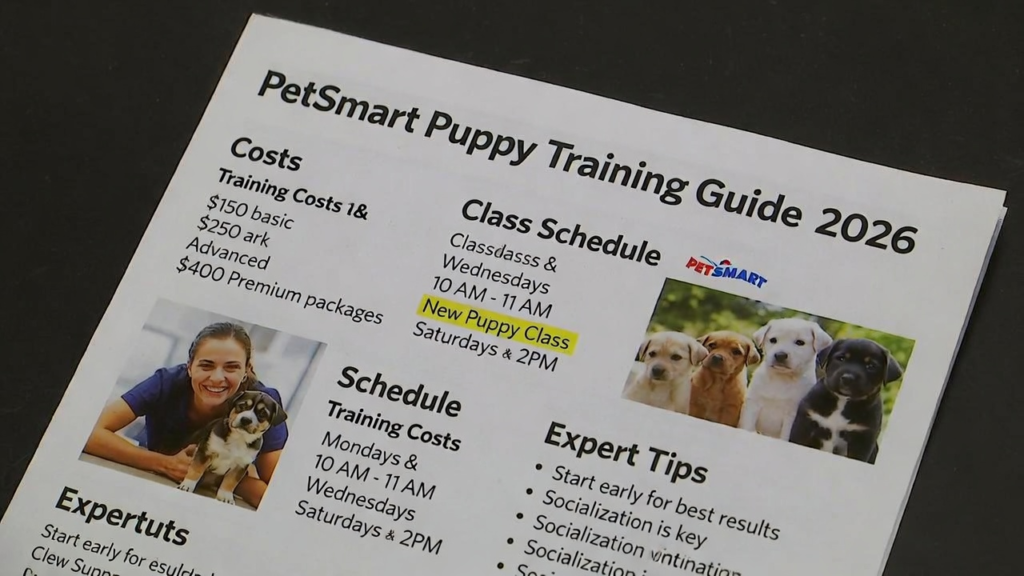
Budget is always a factor when you have a new pet. Generally, a 6-week petsmart puppy training course costs around $149. If you break that down, it’s about $25 per hour of professional instruction. That is a great deal compared to private trainers who might charge $100 or more for a single hour!
If you want to save even more, PetSmart often offers “training packages.” These bundles might include the puppy class, an intermediate class, and even a “brain games” session at a discounted rate. It’s an investment in your dog’s future. Think of it this way: spending a little on petsmart puppy training now can save you a lot of money on chewed-up furniture and stress later!
Key Skills Your Puppy Will Master
What exactly will your dog learn? The curriculum for petsmart puppy training is designed to cover the essentials. First, they focus on “cues” like sit, down, and stay. These are the building blocks of communication. But they also tackle the “annoying” stuff, like puppy nipping and jumping on guests.
One of the most valuable things taught is the “recall” or the “come when called” command. This is vital for safety. If your dog ever slips out the front door, you need to know they will turn around and run back to you. Through petsmart puppy training, you practice this over and over with plenty of treats so that “come” becomes your dog’s favorite word.
Meeting the PetSmart Accredited Trainers
You might wonder, “Who is actually teaching my dog?” Every person leading a petsmart puppy training class is a PetSmart Accredited Trainer. This means they have gone through a rigorous training program developed by experts. They understand dog body language and how to keep a class moving smoothly.
What I love about these trainers is their patience. They know that every dog (and every owner!) learns at a different speed. If your puppy is having a “stubborn” day, the trainer can offer a different way to teach the cue. Having an expert eye on your pup during petsmart puppy training helps you catch small problems before they become big habits.
Transitioning to Intermediate and Advanced Classes
Once you finish your first course, the fun doesn’t have to stop. Most dogs benefit from moving into “Intermediate” or “Advanced” classes. These levels build on the petsmart puppy training foundations. For example, in intermediate training, you might work on “stay” while you walk across the room, or “heel” while walking through the store aisles.
PetSmart also offers fun specialized classes like “Brain Games” and “Trick Training.” These are great for high-energy breeds that need extra mental stimulation. After you’ve aced petsmart puppy training, these extra classes keep your dog’s mind sharp and your bond strong. It’s a lifelong journey of learning together!
Private Lessons vs. Group Puppy Classes
Sometimes, a group setting isn’t the best fit for every dog. If your pup is very shy or easily overwhelmed, PetSmart also offers private lessons. These are one-on-one sessions with a trainer. While group petsmart puppy training is great for socialization, private lessons allow you to focus on specific issues like “potty training” or “crate training” at your own pace.
Most people find that a mix is best. You can start with a few private sessions to get the basics down and then join a group petsmart puppy training class for the socialization benefits. The trainers are very flexible and want to help you find the setup that makes you and your pup the most comfortable.
Training Tips for Success at Home
The hour you spend in class is just the beginning. To really see results from petsmart puppy training, you have to do your “homework.” Practice for just 5 or 10 minutes a day at home. Puppies have short attention spans, so short and sweet is the way to go!
Keep a bag of “high-value” treats (like small bits of chicken or special training treats) handy. Whenever you see your puppy doing something good—like lying down quietly while you eat—reward them! This reinforces the lessons they learn in petsmart puppy training. Consistency is the secret. If everyone in the house uses the same words and rewards, your puppy will learn twice as fast.
Real Stories: Success with PetSmart Training
I’ve seen so many pet parents go from “I can’t handle this puppy!” to “Look at my amazing dog!” after finishing their petsmart puppy training. One owner had a Labrador puppy that would pull so hard on the leash it was painful to walk him. After six weeks of the “loose leash” exercises, they were walking through the park with a loose, happy leash.
Another family used the “Stress Less” class alongside their petsmart puppy training to help a rescued puppy overcome separation anxiety. Seeing that progress is so rewarding. These classes don’t just change the dog; they change the owner’s life by making pet parenthood much less stressful.
Frequently Asked Questions (FAQs)
1. How old should my puppy be for PetSmart training?
Puppies can start as early as 10 weeks old! They just need to have their first round of vaccinations to stay safe. It is actually best to start petsmart puppy training early while they are still in their “learning window.”
2. What do I need to bring to the first class?
You should bring a 4-to-6-foot leash (no retractable leashes!), a flat collar or harness, and a bag of tiny, soft treats. Don’t forget to bring your puppy’s vaccination records for the trainer to check!
3. What if my puppy is “too hyper” for a group class?
Don’t worry! Most puppies are hyper. That is exactly why they are there. The trainers are used to wiggles and barks. Petsmart puppy training is designed to help high-energy dogs learn how to settle down and focus.
4. Can I retake a class if my dog doesn’t get it?
Yes! PetSmart has a “100% Satisfaction” policy. If you aren’t happy or feel your dog needs a bit more time, you can often talk to the trainer about retaking the class or getting extra help.
5. How many dogs are usually in a class?
To make sure everyone gets enough attention, petsmart puppy training classes are kept small, usually between 3 to 10 dogs. This allows the trainer to help you individually while still providing a social atmosphere.
6. Does PetSmart use “clicker” training?
Yes, many trainers use clicker training as part of petsmart puppy training. It’s a great way to tell your dog exactly when they did something right. If you prefer not to use a clicker, you can use a “marker word” like “Yes!” instead.
Conclusion: Start Your Puppy’s Journey Today!
At the end of the day, petsmart puppy training is about more than just obedience; it is about the friendship you share with your dog. By investing a little time and effort now, you are setting the stage for a lifetime of happy memories. No more chewed-up shoes or stressful walks—just a well-behaved companion who loves to be by your side. So, grab some treats, put on your walking shoes, and head to your local store. Your puppy is ready to learn!