



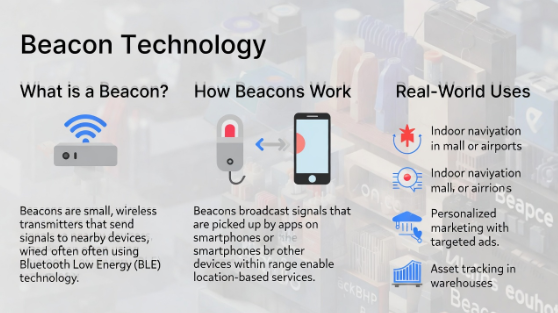
A beacon is a small technology with a big purpose. It helps people find places, get information, and stay connected. In simple terms, a beacon sends signals to nearby devices. These signals share helpful data like location or alerts. You may not see a beacon, but you use one more often than you think. Airports, malls, museums, and hospitals all rely on beacon systems.
What makes a beacon special is its simplicity. It works quietly in the background. It does not track people directly. Instead, it shares signals that apps can read when allowed. This makes beacon technology safe, useful, and powerful. I have personally seen how beacons improve customer experience in retail stores. Customers find products faster and feel less confused.
This article explains everything in a simple way. You will learn how a beacon works, where it is used, and why it matters. Even a child can understand it by the end.
What Is a Beacon in Simple Words
A beacon is a small wireless device. It sends out a signal using Bluetooth. Phones and tablets nearby can receive that signal. The beacon does not collect personal data. It only sends information.
Think of a beacon like a lighthouse. A lighthouse sends light to guide ships. A beacon sends signals to guide devices. That signal might say, “You are near the entrance,” or “This product is on sale.” The phone decides what to do with that message.
Most beacons are small and battery-powered. Some batteries last years. This makes them easy to install. Businesses like beacons because they are affordable and simple. From my experience, many companies start small with beacons. Later, they expand once they see results.
A beacon works only at short distances. That makes it accurate. This accuracy is why beacon technology is trusted indoors, where GPS often fails.
How Beacon Technology Works Step by Step
Beacon technology works in a very clean way. First, the beacon sends out a Bluetooth signal every second. This signal includes a unique ID number. The beacon does this without stopping.
Next, a smartphone with the right app hears the signal. The phone checks the ID. Then it asks a server what that beacon means. The server sends back instructions. Finally, the app shows a message or action.
This process happens in seconds. The user barely notices it. From a technical view, this system is efficient and secure. The beacon never knows who you are. The phone controls everything.
I like beacon systems because they respect user choice. If Bluetooth or permissions are off, nothing happens. This builds trust. Trust is a key reason beacon solutions continue to grow in popularity.
Types of Beacons You Should Know
There are different types of beacon devices. Each one serves a unique purpose. The most common type is the Bluetooth beacon. This is used indoors. It is low power and very reliable.
Another type is the Wi-Fi beacon. These work in larger spaces. They are less common but useful in campuses. Some systems also use GPS beacons. These work outdoors and help with navigation.
In my professional experience, Bluetooth beacons are the best starting point. They are affordable and easy to manage. Many businesses combine beacon types later. This creates a stronger system.
Choosing the right beacon depends on space, budget, and goals. There is no single perfect choice. Understanding your needs is more important than buying expensive hardware.
Real-World Uses of Beacon Technology
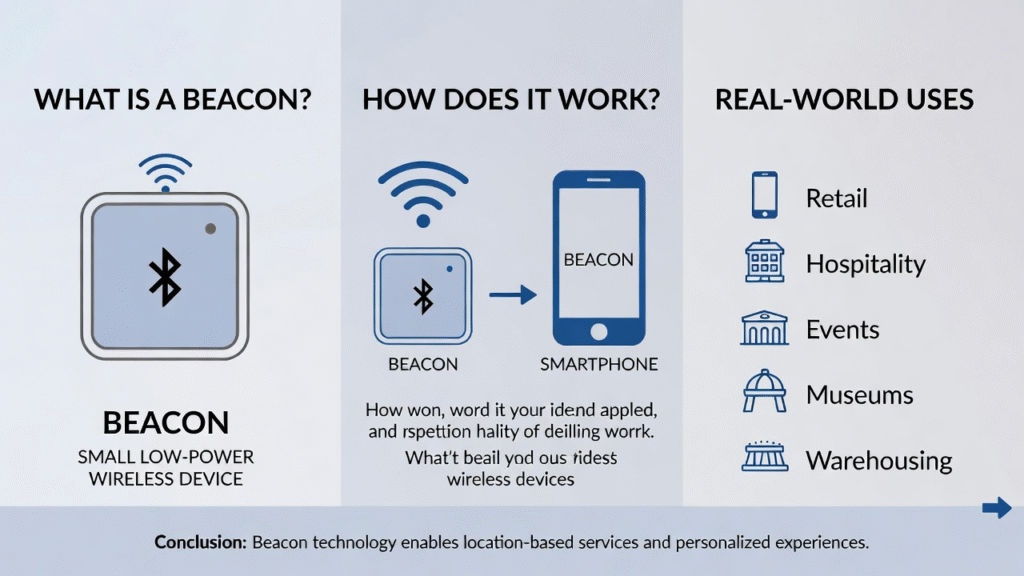
Beacon technology is everywhere. Retail stores use beacons to guide shoppers. Airports use them to help travelers find gates. Museums use beacons to tell stories about exhibits.
I once visited a museum that used a beacon system. As I walked, my phone explained each display. No guide was needed. The experience felt personal and smooth.
Hospitals also use beacons. They help patients find rooms and reduce stress. Schools use beacons for safety alerts. Even stadiums use beacon signals for seat guidance.
These examples show one thing clearly. A beacon improves experiences. It does not replace people. It supports them quietly and efficiently.
Benefits of Using a Beacon System
A beacon system brings many benefits. First, it improves accuracy indoors. GPS often fails inside buildings. A beacon does not.
Second, it saves time. Users get the right message at the right place. This reduces confusion. Third, beacon solutions are cost-effective. Small batteries last years. Maintenance is low.
From a business view, beacons improve engagement. Customers feel guided, not forced. This builds loyalty. I have seen higher app usage when beacons are added.
Another key benefit is data insight. Businesses learn which areas are busy. They improve layouts based on real movement. This makes beacon technology a smart long-term investment.
Beacon vs GPS: What Is the Difference
Many people confuse a beacon with GPS. They are not the same. GPS works best outdoors. It uses satellites. Indoors, GPS struggles.
A beacon works indoors. It uses Bluetooth signals. It does not need satellites. This makes it more accurate in buildings. GPS shows general location. A beacon shows exact proximity.
In practice, both can work together. GPS brings users close. A beacon guides them inside. This combination is powerful.
Understanding this difference helps avoid mistakes. Choosing the wrong system can waste money. Knowing when to use a beacon saves time and improves results.
Is Beacon Technology Safe and Private?
Safety matters. A beacon is designed with privacy in mind. It does not collect personal data. It only sends signals.
The user controls permissions. If Bluetooth is off, the beacon does nothing. If the app is removed, nothing happens. This transparency builds trust.
From my experience, users feel comfortable with beacons once explained properly. Education removes fear.
Beacon systems follow strict rules. This makes them suitable for public spaces. When used responsibly, a beacon is one of the safest location tools available.
How Businesses Can Start Using Beacons
Starting with beacons is simple. First, define your goal. Do you want navigation, alerts, or engagement?
Second, choose the right beacon hardware. Start small. Test results. Third, connect beacons to a simple app or platform. Many tools exist today.
I always recommend testing in one area first. Learn from real users. Then expand. This reduces risk and improves success.
Beacon projects succeed when they focus on user benefit. Technology should serve people, not confuse them.
Future of Beacon Technology
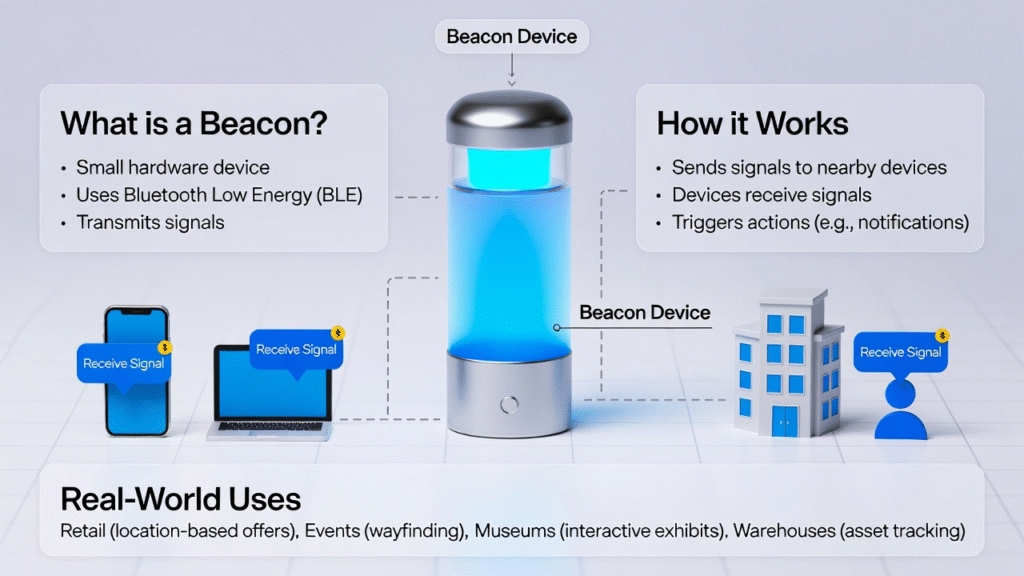
The future of beacon technology looks strong. Smart cities are adopting beacons. Retail is becoming more personalized.
Beacons will work with AI and IoT. This will create smarter spaces. Imagine buildings that guide you automatically. That future is close.
From my view, beacons will not disappear. They will evolve quietly. Simplicity is their strength.
As long as indoor navigation matters, the beacon will stay relevant.
FAQs
What is a beacon used for?
A beacon is used to send location-based signals indoors. It helps guide and inform users.
Does a beacon track people?
No. A beacon only sends signals. Phones decide how to respond.
Do beacons need internet?
The beacon itself does not. The app may need it.
How long does a beacon battery last?
Most beacon batteries last one to three years.
Can any phone detect a beacon?
Most modern smartphones can detect beacon signals.
Are beacons expensive?
No. Most beacon devices are affordable and low-maintenance.
Conclusion
A beacon may be small, but its impact is huge. It improves navigation, engagement, and safety. It works quietly and respects privacy.
From real-world experience, beacons succeed when they focus on helping people. They are not flashy. They are useful.
If you want smarter indoor experiences, a beacon is worth exploring. Start small. Learn fast. Grow wisely.